COP in My City 2026
Beyond Negotiations: Climate Summit Demands Ground-Level Action
With the global COP31 summit in Turkey just around one month away, policymakers, environmental experts, and youth leaders convened in Lahore on Monday, demanding a shift from international negotiations to domestic implementation.
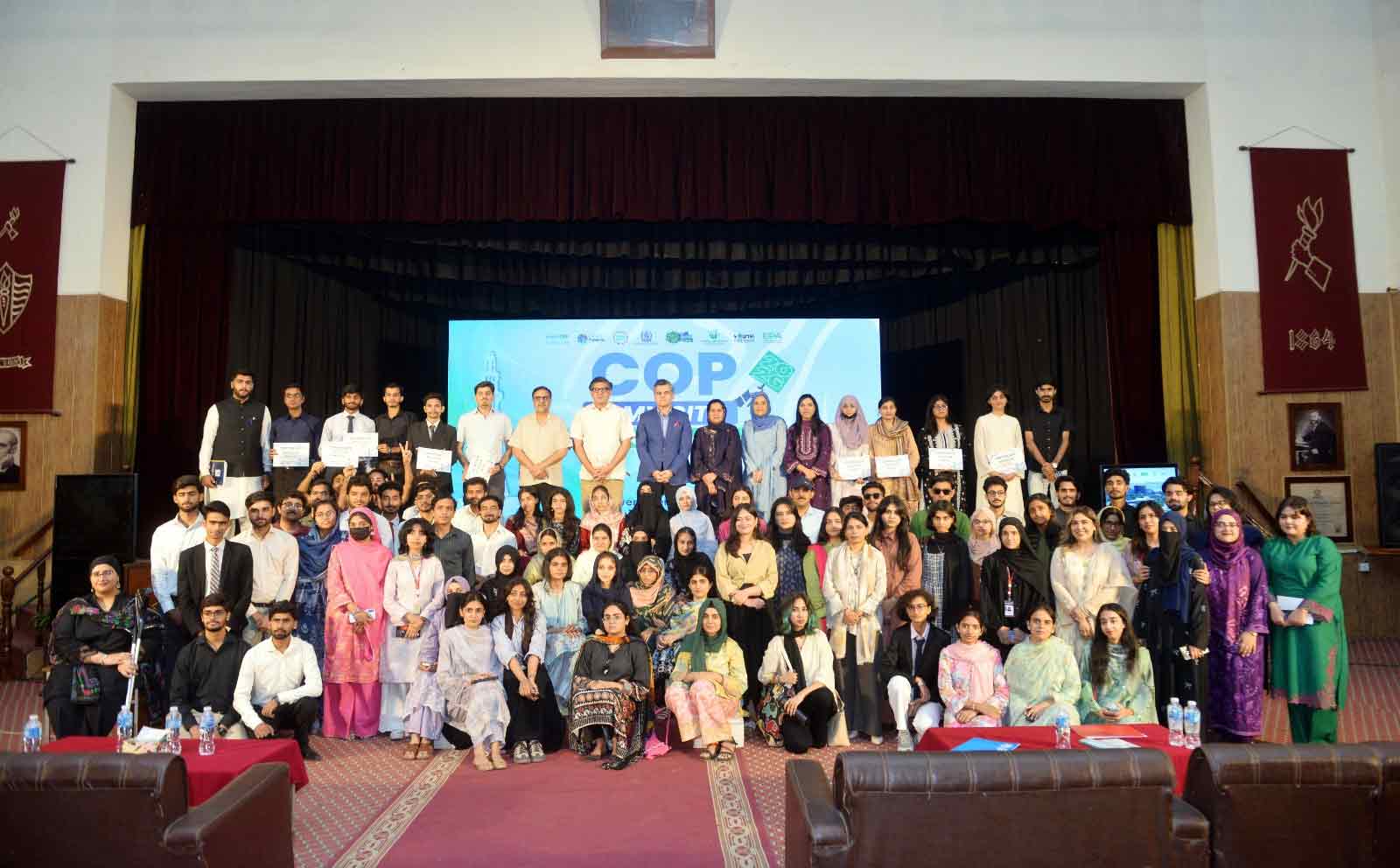
The day-long “Provincial Climate Conclave Punjab – COP in My City 2026” was held at Government College University (GCU) Lahore. It was organized by the GCU Environment Protection Society in collaboration with UNICEF, Youth 4 Climate, the Ministry of Climate Change and Environmental Coordination (MoCC&EC), and the Prime Minister’s Youth Programme (PMYP).
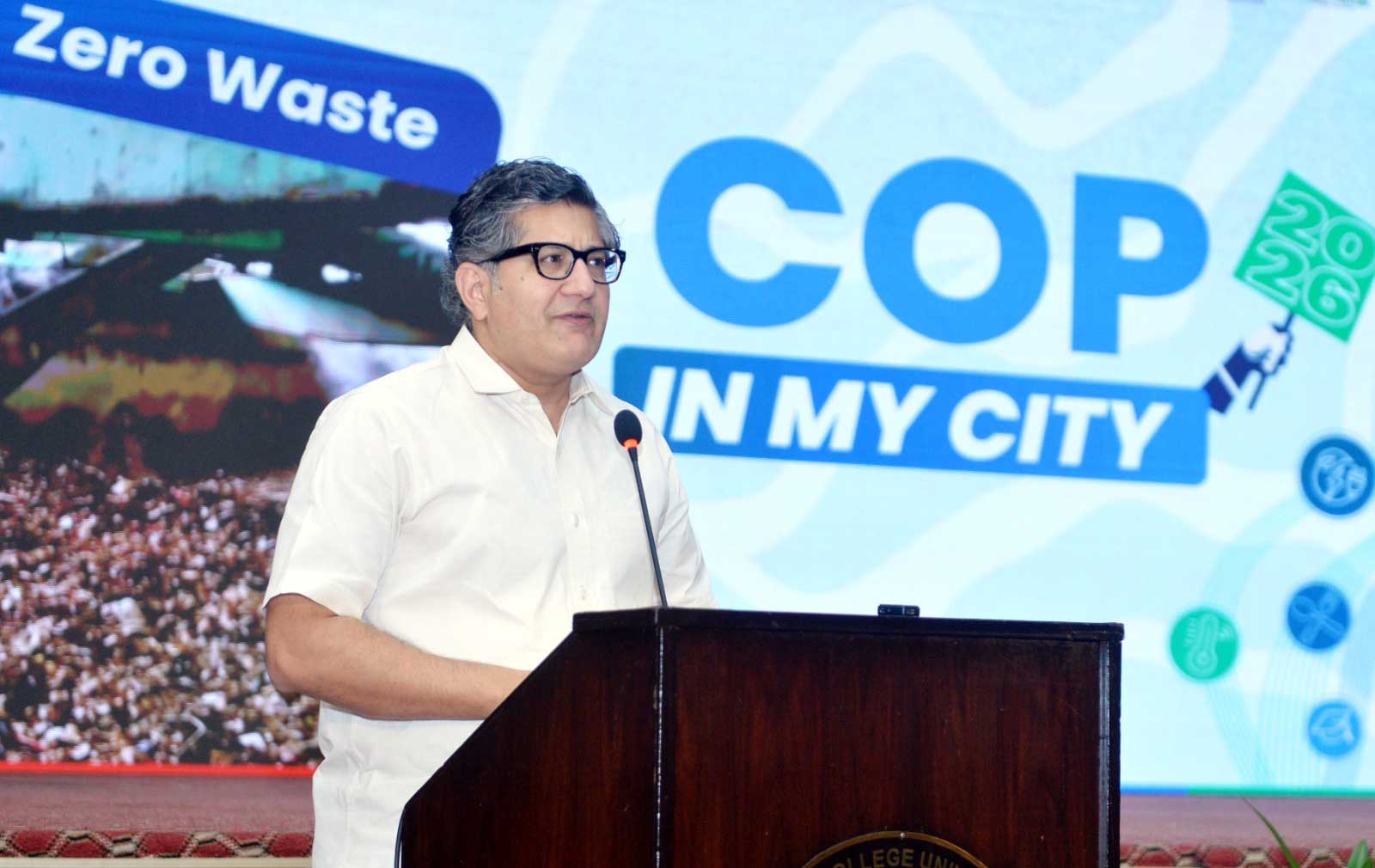
Speaking at the session, GCU Vice Chancellor Prof. Dr. Muhammad Omer Chaudhry highlighted the severe disconnect between Pakistan’s climate footprint and its vulnerability.
“We are fighting a war that was not started by us,” the GCU VC stated. He pointed out the global inequality where Pakistan contributes just 0.4% to global carbon emissions, while the top four nations account for 50%. Citing domestic environmental degradation, he noted the alarming loss of 500 acres of farmland monthly to residential societies and the disappearance of local biodiversity due to massive urbanization and pesticide use.
Urging a collective lifestyle shift rather than relying solely on government intervention, Dr. Chaudhry outlined GCU’s institutional countermeasures. These include rainwater harvesting, ground water recharge, a zero-plastic campus policy, a transition to solar energy and going paperless for all administrative communications, for which he encouraged other institutions to adopt.
Federal and provincial officials echoed the demand for immediate, practical action. Amir Mohyuddin, Additional Secretary at the MoCC&EC, stressed that developing nations can no longer afford to focus only on global pledges. Recalling the 2022 floods and projecting future water scarcity by 2025, he urged a national pivot towards ground-level adaptation.
Punjab Environmental Protection Agency (EPA) Director General Abdullah Nayyar Sheikh detailed the ongoing battle against smog, air pollution, and deteriorating water quality. Unveiling new technological enforcement measures, he announced the deployment of 56 air-pollution monitoring systems across Punjab and the development of predictive forecasting models to combat severe heatwaves.
Sabahat Ambreen, WASH and CEE Specialist at UNICEF, framed the severe human cost of climate inaction as a fundamental rights issue. She noted that climate change directly threatens children’s rights, recalling how recent floods disrupted schools and stunted childhood development across the province.
To prepare the next generation for these escalating challenges, Rameen Mashhood of the PMYP National Youth Council outlined a four-pillar strategy—Education, Employment, Engagement, and Environment—designed to integrate youth directly into national climate policymaking and adaptation efforts.
Throughout the day, youth participants engaged in four critical breakout sessions: Loss and Damage, Climate Finance and Just Transition, Decarbonization and Carbon Markets, and Resilience and Adaptation. A central focus of these workshops was the glaring gap between international climate finance commitments and the actual funds reaching vulnerable communities.
Environmental lawyer Ahmad Rafay Alam grounded these discussions in international law, unpacking the United Nations Framework Convention on Climate Change (UNFCCC) and the Green Climate Fund (GCF). He emphasized that strong regulatory frameworks and legal awareness are mandatory tools for holding institutions accountable and securing necessary climate finance.
The summit concluded with the announcement of 10 shortlisted youth participants. These delegates will represent Punjab at the upcoming COP Finale in Islamabad, carrying the province’s mandate for urgent, practical climate action to the national stage.