2025-11-19
GCU conference deliberates on AI, public health challenges
The 6th International Conference on Innovative Biological and Public Health Research began on Tuesday at Government College University Lahore to deliberate on emerging scientific developments and pressing public health challenges.
The two-day conference, organised by the university’s Department of Zoology, features six international keynote speakers from the United Kingdom, China, Turkey, Hong Kong and Austria, alongside leading local experts.
The inaugural session was attended by three vice chancellors, including Punjab University’s Prof Dr Muhammad Ali and King Edward Medical University’s Prof Dr Mahmood Ayyaz.
Speakers at the conference highlighted that artificial intelligence cannot replace humans, but it can complement traditional scientific approaches to address some of Pakistan’s most pressing health and environmental challenges.
In his address, PU Vice Chancellor Prof Dr Muhammad Ali said rapid technological shifts had reinforced the relevance of biological sciences, which, he stressed, cannot be replaced by artificial intelligence. He noted that challenges such as deteriorating air quality, worsening water scarcity, climate instability and public health emergencies require biological and environmental expertise rather than purely technological solutions. Artificial intelligence, he added, may support scientific work, but it cannot create clean air, store floodwater, or prevent disease outbreaks.
Prof Ali warned that Pakistan was entering an era where extreme weather patterns, water mismanagement, and environmental degradation would increasingly threaten livelihoods and food security. He noted that recent flooding had displaced millions, while future periods of water shortage would further strain communities and agriculture. He emphasised the need for evidence-based policymaking, smarter water use in farming, and long-term planning to build national resilience against climate change.
KEMU Vice Chancellor Prof Dr Mahmood Ayyaz argued that artificial intelligence should be viewed as a tool that amplifies human capability rather than replaces it, noting that innovation, adaptability and a willingness to change are essential for scientific progress in an era where biological data increasingly drives decision-making in health and research.
He added that KEMU had also set up a dedicated School of Artificial Intelligence, where students are developing AI-based tools for hospitals, diagnostics, telemedicine and disease prediction, describing it as a model of how traditional medical institutions can step confidently into the future.
The vice chancellor also underscored the importance of collaboration among universities, calling it the only path to meaningful scientific transformation. He said Pakistani institutions have the talent and capacity to produce innovations competitive at the global level.
University of Gujrat VC Prof Dr Zahoor-ul-Haq highlighted the challenges and opportunities facing research and innovation in Pakistan, noting that limited funding has historically constrained universities’ ability to translate ideas into impactful solutions. He welcomed the recent increase in provincial support, which he said now allows institutions to implement research projects and invest in innovative initiatives. He also emphasised the need for entrepreneurship and global competitiveness.
Addressing students, GCU Dean Prof Dr Babar Aziz said they are future scientists and public health leaders whose curiosity would shape tomorrow’s solutions.
Prof Dr Muhammad Tahir, in his welcome address, said the conference served as a platform for scientific exchange and collaboration across molecular biology, immunology, genetics, microbiology, wildlife sciences, psychology and public health. He said the conference included two plenary sessions, keynote lectures, oral and poster presentations, and panel discussions, drawing more than 425 national and international participants.
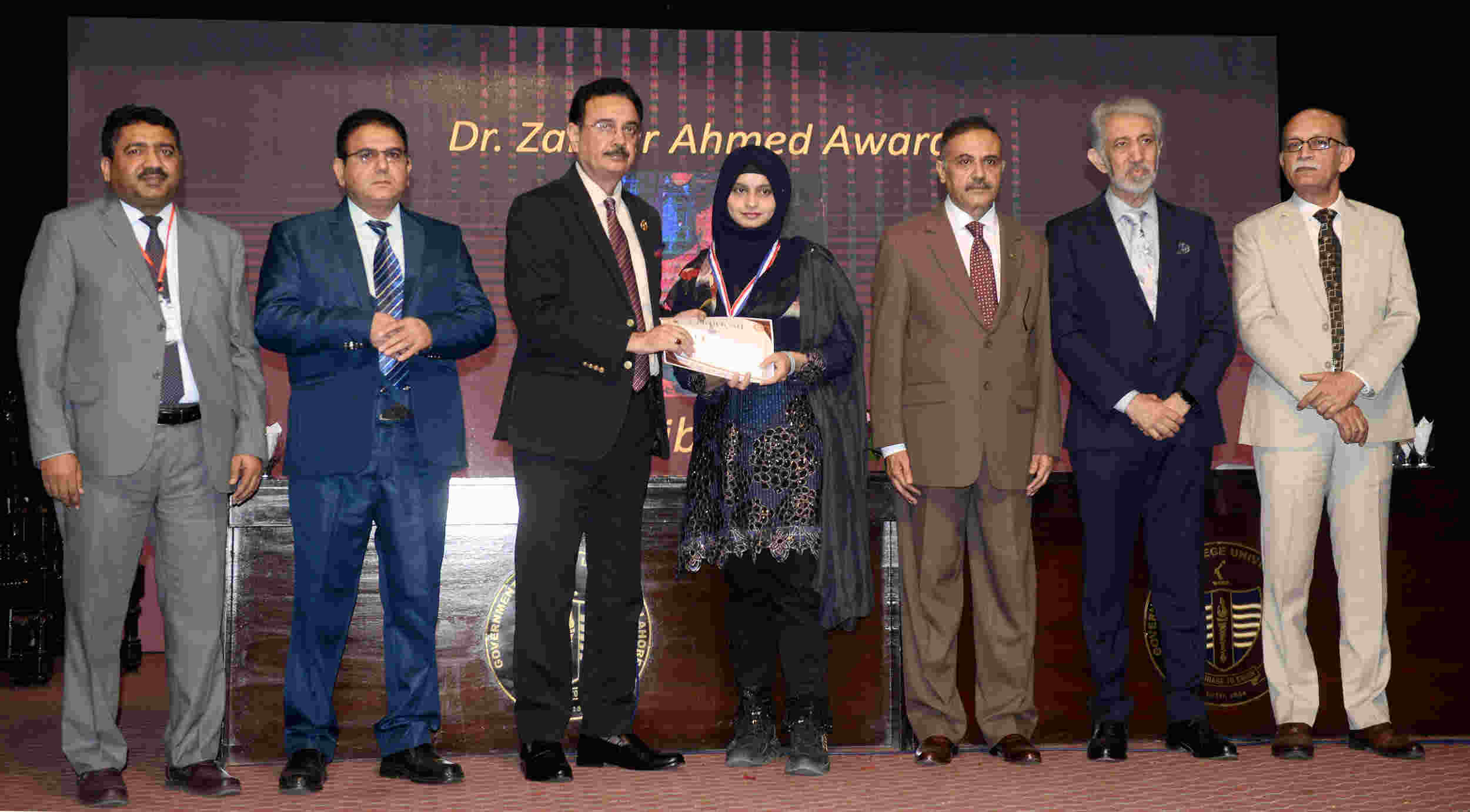
Six gold medals and cash awards were announced for outstanding researchers. The Dr Nazeer Ahmed Gold Medal was presented to Dr Azhar Rasul, while the Prof Dr Sharif Mughal Gold Medal went to Dr Tanveer Hussain. The Sabira Shafi Gold Medal was awarded to Dr Abid Ali. The Prof Dr Ashraf Mirza Gold Medal was jointly conferred upon Zain Fatima and Muhammad Abdullah Javed, and the Prof Dr Zaheer Ahmed Gold Medal was awarded to Sibgha Khalil.