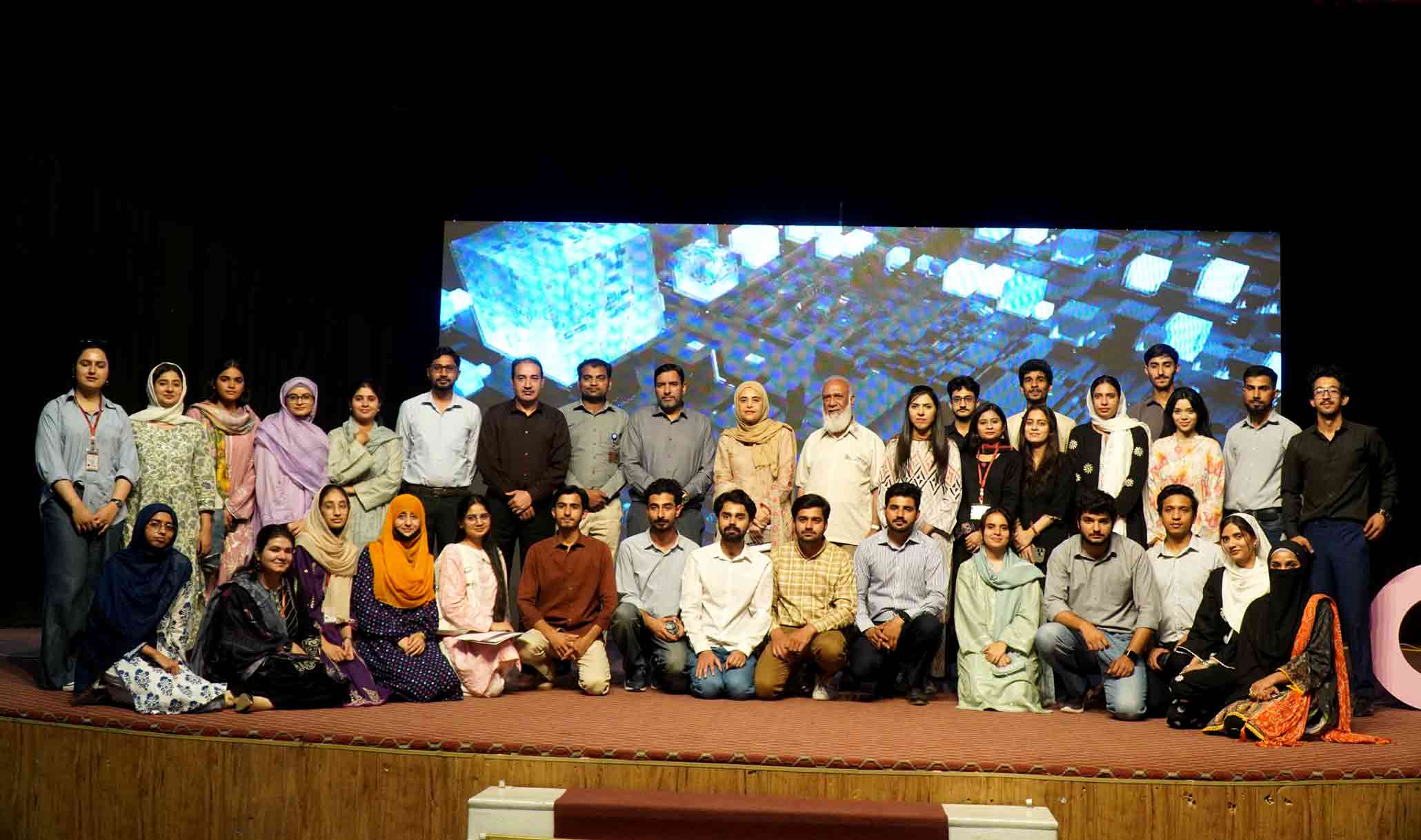
GCU summit pushes for textile decarbonisation amid global crises
The global textile industry must urgently slash its carbon footprint and adopt circular economies, even as global conflicts threaten to sideline climate action, experts warned at a digital summit hosted by Government College University (GCU) Lahore.
Marking World Earth Day, the "CO₂ Talks 2026 – Digital Summit" was jointly organised by GCU, the Apparel Impact Institute (Aii), and the Pakistan Readymade Garments Manufacturers and Exporters Association (PRGMEA) to foster collective action on sustainability challenges in the apparel sector.
GCU Vice Chancellor Prof. Dr. Muhammad Omer Chaudhry stated that the summit successfully gathered industry leaders, innovators, and sustainability professionals from across the textile value chain. He stressed that bridging the gap between global demands and local practices requires robust, sustained collaboration between industry and academia.
Highlighting the sheer scale of the challenge, Ms. Yulia, Head of Project TextILES II at GIZ Pakistan, said that the textile sector is responsible for roughly 10 per cent of global CO₂ emissions. “For Pakistan, a country heavily reliant on textile exports, adapting to increasingly stringent international frameworks, such as European Union regulations, is rapidly becoming a matter of economic survival,” she said.
Dr. Nabeel Amin of the National Compliance Center (NCC) stressed that government backing is essential to help local industries align with global Environmental, Social, and Governance (ESG) standards. Representatives from the Aii, alongside industry leaders from Sapphire Textile Mills and SMEDA, outlined actionable steps for small and medium enterprises (SMEs). They noted that transitioning to clean energy and improving energy efficiency are no longer optional for SMEs hoping to remain competitive in the global supply chain.
Dr. Hammad Naqi Khan, Director General of WWF-Pakistan, shared a major success story from Balochistan, where organic farming initiatives are now producing 50,000 tons of sustainable cotton to meet the surging global demand for eco-friendly products.
Earlier in her opening address, GCU Director ORIC Prof. Dr. Faiza Sharif explained that the university deliberately maintained a digital format in view of current geopolitical conflicts. The decision, she noted, reaffirmed the principle that while borders may close, climate action must remain open, continuous, and globally connected. She added that the summit aligns directly with Pakistan’s Nationally Determined Contributions (NDCs) and the United Nations Sustainable Development Goals (SDGs), focusing heavily on circularity, decarbonisation, and inclusivity.
Highlighting the university's commitment to these goals, Dr. Sharif pointed to GCU’s expanding environmental internship initiative. The programme, which began with just four students in 2023, has now successfully placed over 100 students in crucial policy and environmental organisations, including the Punjab Environmental Protection Department.
Technical sessions, moderated by Zainab Naeem of the Sustainable Development Policy Institute, offered a glimpse into the future of manufacturing. Dr. Abdul Sattar Nizami of GCU presented biorefinery models capable of reusing 80 to 90pc of industrial waste, while Dr. Shahid Rasul from the UK’s Northumbria University explored the integration of hydrogen energy to decarbonise factory floors. Retail and design experts, including LAAM CEO Arif Iqbal, also advocated for closed-loop, tech-driven retail systems to minimise consumer waste.
Wrapping up the summit, PRGMEA Decarbonisation Committee Convener Dr. Muhammad Ayyaz Uddin called for an aggressive, unified shift in how clothes are made. He warned that without immediate, cross-border collaboration and a rapid transition to clean energy, the global textile sector risks being left behind by an increasingly climate-conscious market.
Representatives from the Apparel Impact Institute (Aii), Ms. Disha Pande and Mr. Laxmikant Jawale, outlined global sustainability initiatives and supply chain decarbonisation strategies. Additionally, Mr. Sheharyar of SMEDA Pakistan emphasized the need for SME energy efficiency and policy support for sustainable industrial growth.
Dr. Lynn Wilson of Circular Design Synergy Ltd and Ms. Manisha Saroha Marival of CETI discussed closed-loop textile systems, sustainable materials, and the integration of circular models into daily operations. Finally, Mr. Saqib Shahzad of Sapphire Textile Mills addressed practical ESG implementation and the alignment of local manufacturing with global regulatory frameworks.