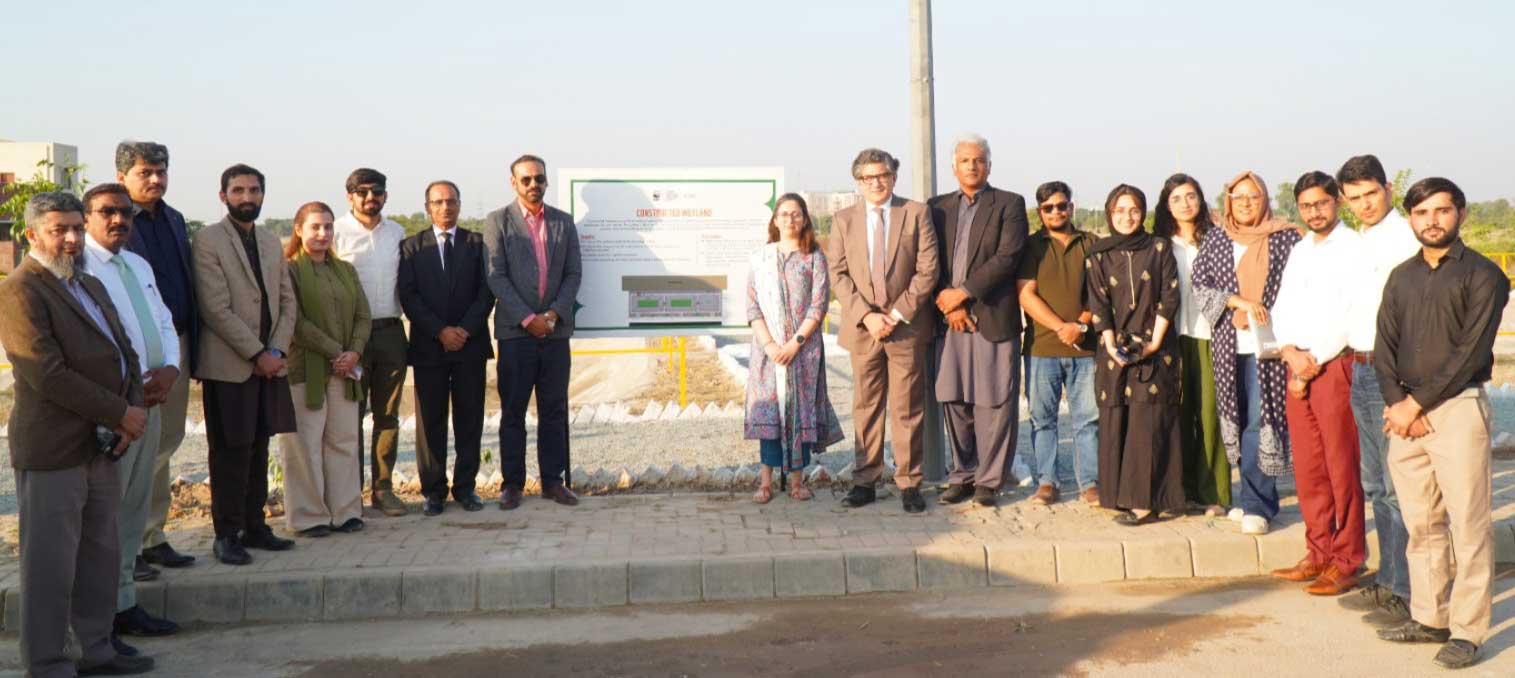
Wetland inaugurated at GC to treat wastewater for irrigation
A constructed wetland designed to treat wastewater for irrigation was inaugurated at Government College's Kala Shah Kaku campus on Tuesday, providing a nature-based approach to reducing pollution and reusing water.
Established by WWF-Pakistan with funding from GSK and support from WWF-UK, the facility treats water collected from the main drain passing through the campus and makes it available for horticulture.
The system uses 80 floating treatment sheets planted with native species to help clean the wastewater. Constructed wetlands are engineered systems that draw on natural wetland processes to treat polluted water.
GC Vice Chancellor Prof Dr Muhammad Omer Chaudhry inaugurated the facility alongside WWF-Pakistan Senior Director Programmes Dr Masood Arshad and WWF-UK Senior Programme Advisor for Asia Anum Farhan.
Speaking on the occasion, Prof Chaudhry said the facility would also serve as a “living classroom”, giving students and faculty opportunities to study sustainable water management and undertake research.
Dr Arshad said growing water scarcity and polluted drains were placing pressure on cities and institutions. The wetland demonstrated how nature-based solutions could help treat wastewater and allow institutions to reuse water that would otherwise go to waste, he added.
Anum Farhan highlighted the role of partnerships between businesses, universities and conservation organisations in addressing water challenges. She described the facility as a practical example of collaboration benefiting people and nature.
According to WWF-Pakistan, the wetland is also intended to improve the campus surroundings and reduce odours associated with wastewater. The organisation described it as a low-cost model that could be replicated at other institutions and in urban areas.
The facility is part of the GSK-funded project, Building Water-Sensitive Societies: Collaborative Solutions for Freshwater Resilience and Sustainability, implemented by WWF-Pakistan with support from WWF-UK.